
Who Keeps the Accounts Receivable When You Sell Your Business?


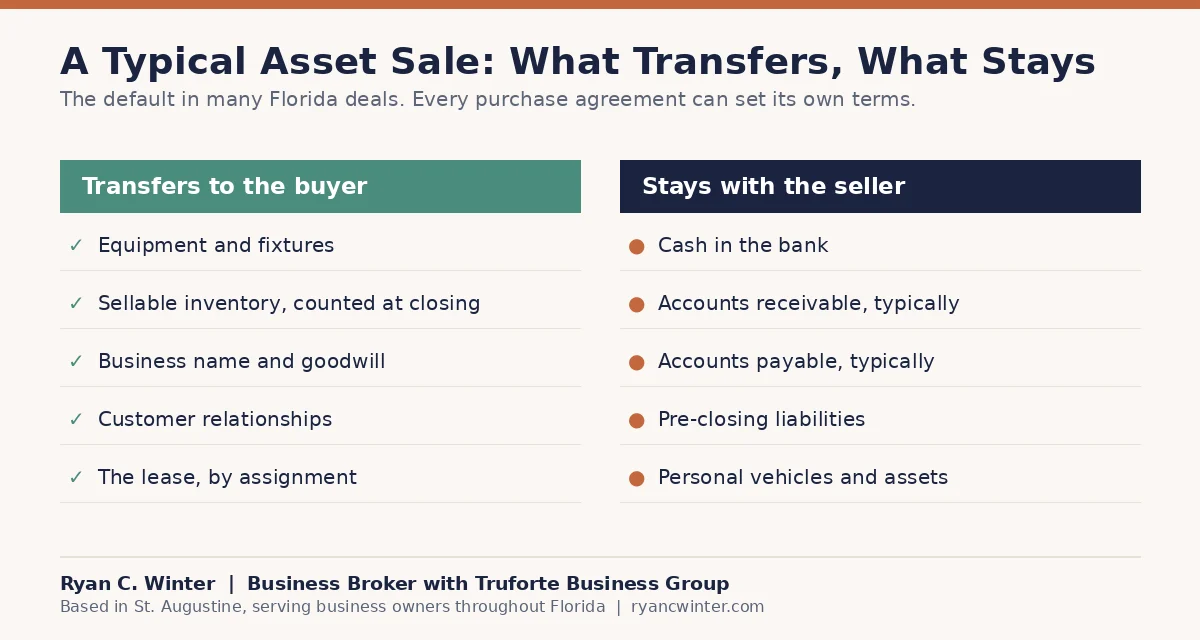
Short answer: In most Florida small business asset sales, the seller keeps the accounts receivable that exist at closing, and remains responsible for the accounts payable. But this is a default, not a law. The purchase agreement decides, and when receivables are included in the sale their value is typically added to the price.
Here is a question that surprises a lot of sellers during their first offer review: who keeps the money customers still owe the business? Accounts receivable, the invoices your customers have not paid yet, can add up to real money, and whether you or the buyer keeps it has to be settled clearly in the deal. I am a business broker based in St. Augustine working with owners throughout Florida. Here is how it usually works and what to watch for.
The Default: The Seller Keeps the Receivables
In most small business asset sales, the seller keeps the accounts receivable that existed as of closing. The logic is simple: you did the work and earned that revenue before the sale, so you collect it. The buyer starts fresh, keeping the money from sales they make after they take over. This is the most common arrangement, but it is not automatic, which is why it must be spelled out in the purchase agreement.
When Receivables Are Included in the Sale
Sometimes a buyer wants the receivables included, especially if collecting them is central to running the business smoothly, or if abrupt changes in billing would confuse customers. When that happens, the value of those receivables is usually added to the purchase price, and the deal accounts for the risk that some invoices may never be collected. Expect the buyer to scrutinize their age and quality, because a ninety day old unpaid invoice is worth less than a fresh one.
If receivables do ride along, they also show up in the tax paperwork: in an asset sale the price is allocated across asset classes on IRS Form 8594, receivables are their own class, and both sides must report the same allocation. Loop in your CPA before you agree to numbers.
Asset Sale vs. Stock Sale Changes the Answer
Everything above describes an asset sale, which is how most small Florida deals are structured. In a stock sale, the company itself changes hands, and the receivables belong to the company, so they transfer with it automatically unless the agreement carves them out. If you are weighing the two structures, see asset sale versus stock sale, because the choice affects taxes and liability as well as receivables.
In larger transactions, receivables often stop being a separate line item altogether and become part of a negotiated working capital arrangement, where the buyer expects the business to come with enough short term assets to operate. If your deal is at that scale, this is a conversation to have early, with your broker and CPA together.
Plan Your Final Collections
If you are keeping the receivables, think about how you will collect them after you no longer control the business. It helps to agree with the buyer on how post closing payments will be handled, since checks may still come in addressed to the company. A common arrangement is that the buyer forwards payments on your pre closing invoices for an agreed period. A simple written understanding prevents awkward disputes over a payment that lands a week after closing.
Do Not Forget Accounts Payable
The flip side of receivables is payables, the bills your business still owes. Just as you typically keep what you are owed, you typically remain responsible for what you owe as of closing. Matching these up, what comes in versus what goes out, is part of getting a clean break, and it is one of the things due diligence will verify in both directions.
Frequently Asked Questions
Who keeps the accounts receivable when a business is sold?
In most Florida asset sales, the seller keeps receivables earned before closing and the buyer keeps revenue from work done after. The purchase agreement governs, so the default only applies if the contract says so.
What happens if a customer pays the buyer for my invoice after closing?
Well drafted deals include a simple forwarding arrangement: payments on pre closing invoices get passed to the seller for an agreed period. Put it in writing before closing rather than sorting it out afterward.
Are accounts receivable included in the purchase price?
Usually not in small asset sales, where the seller keeps them. When they are included, their value is typically added to the price, with older invoices discounted for collection risk, and the allocation reported on IRS Form 8594.
Do I still have to pay my business debts after selling?
In a typical asset sale, yes. Liabilities that existed before closing usually stay with the seller unless the buyer expressly assumes them in the agreement.
Get the Details Right
Receivables and payables are the kind of detail that is easy to overlook until it costs you. They sit alongside how inventory is counted and paid for as the balance sheet questions every seller should settle early, and both are part of the larger process of selling a business in Florida. I help sellers handle them cleanly so you collect what you earned and hand over exactly what you agreed to. The first conversation is free and completely confidential. Call me at (904) 789-1276 or get in touch here.

Curious What Your Business Is Worth?
Get a free, data-driven estimate in under 3 minutes, no obligation, completely confidential.